

Riding the Waves of Popularity: The Origin of ‘Jumping on the Bandwagon’
Have you ever caught yourself suddenly loving a TV show that “everyone” is watching, or supporting a sports team that’s on a winning streak? We’ve all been there! That moment when you realize you’re simply “jumping on the bandwagon” can be quite the reality check. But where exactly did this colorful phrase come from? Grab a seat as we roll back the clock and uncover the surprisingly literal origins of this common expression!
The Circus Origins of the Bandwagon
Before bandwagons became metaphorical vehicles of trending popularity, they were actual, physical wagons with bands on them. Yes, you read that right! The term ‘bandwagon’ emerged in mid-19th century America, specifically referring to the elaborately decorated wagons that carried circus bands during parades.
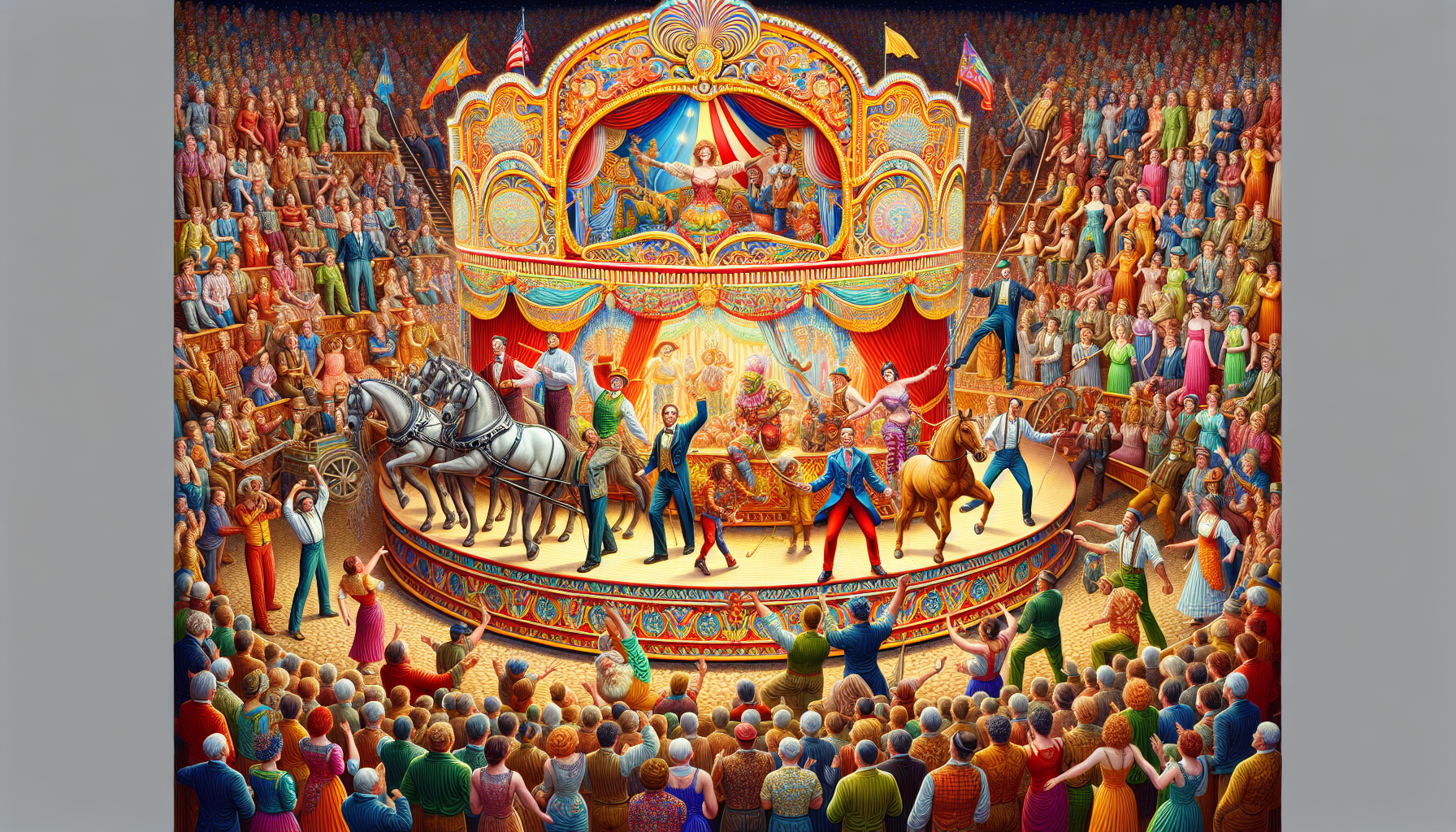
These weren’t just any wagons – they were the star attraction of circus parades, designed to draw crowds with their flashy decorations and lively music. The most famous reference comes from none other than the legendary showman Phineas T. Barnum. In his 1855 autobiography ‘The Life of P.T. Barnum, Written by Himself,’ he casually mentions: ‘At Vicksburg we sold all our land conveyances excepting four horses and the ‘band wagon’.’
These musical caravans served a brilliant marketing purpose: as they rolled through town with musicians playing catchy tunes, people would literally follow them to the circus grounds, drawn by the irresistible combination of music and spectacle. The bandwagon was essentially the 19th-century version of a viral marketing campaign – eye-catching, memorable, and impossible to ignore!
From Circus to Politics: The Bandwagon’s Political Debut
Ever wondered how circus entertainment transformed into political strategy? The story takes an interesting turn in 1848 when Dan Rice, a famous circus clown and showman, had a moment of marketing brilliance.
Rice invited presidential candidate Zachary Taylor to ride on his bandwagon during a campaign parade in Baton Rouge, Louisiana. This wasn’t just a friendly gesture – it was a calculated move that dramatically increased Taylor’s visibility among voters. Despite his limited political experience, Taylor went on to win the election in 1849, and a new campaign strategy was born!
Politicians are quick studies when it comes to winning strategies. By the 1890s, bandwagons had become standard fixtures in political campaigns, especially across the Deep South. Candidates regularly rented bandwagons for parades, understanding that the combination of music, excitement, and visibility was political gold for public relations.
These early campaign techniques leveraged what we now understand as social influence and herd mentality. A candidate seen atop a popular bandwagon, surrounded by cheering crowds, created a powerful impression of popularity and momentum. It was social proof in its most literal form!
The Phrase ‘Jump on the Bandwagon’ Takes Shape
As political bandwagons rolled through American towns, a new expression began forming in the political lexicon. By the late 19th century, “jumping on the bandwagon” emerged as a pointed way to describe the opportunistic behavior of those who hastily supported campaigns once they appeared successful.
The phrase popped up in political speeches during the 1890s, often as warnings against rashly supporting opponents. But perhaps the most famous early use came from Theodore Roosevelt in a 1899 letter where he wrote: “When I once became sure of one majority they tumbled over each other to get aboard the band wagon.” This letter, later published in 1951, captured perfectly the human tendency toward mimetic desire and popularity bias.
What’s particularly interesting is that from the beginning, the phrase carried a somewhat derogatory tone. It implied following the crowd without genuine conviction – jumping aboard simply because others were doing so, not because of principled belief. This early form of calling out “bandwagon fans” shows how long we’ve been aware of (and slightly judgmental about) conformity in society.
The Bandwagon Effect: From Politics to Popular Culture
By the early 20th century, “jumping on the bandwagon” had fully transformed from describing literal political parades to a widespread idiom for opportunistically joining popular trends. The expression had crossed over into mainstream culture, describing everything from fashion cycles to consumer behavior trends.
This shift paralleled the formal recognition of what social psychologists now call the bandwagon effect – a cognitive bias where people adopt beliefs or behaviors simply because others are doing so. This phenomenon explains why popularity seems to create more popularity, whether in viral social media trends, fashion fads, or technological adoption curves.
The digital age has only amplified this effect. Consider how quickly:
- New slang terms spread across platforms
- Fashion trends emerge and disappear
- Apps can gain millions of users practically overnight
- Political movements can suddenly gain mainstream support
Marketing professionals have long understood the power of the bandwagon effect, creating advertisements that suggest “everyone is buying this” or “join the millions who already love our product.” The psychological roots of conformity run deep, and modern applications of the bandwagon principle have become increasingly sophisticated.
Conclusion: The Lasting Impact of the Bandwagon Metaphor
From circus parades to political campaigns to TikTok trends, the concept of “jumping on the bandwagon” has rolled through nearly two centuries of American culture. What began as a literal wagon carrying musicians has become one of our most enduring metaphors for social conformity and trend-following behavior.
The next time you find yourself suddenly interested in something “just because everyone else is,” remember – you’re participating in a tradition that dates back to P.T. Barnum’s circus parades! There’s something almost comforting in knowing that despite all our technological advances, we humans still respond to the same social cues that drew crowds in the 1850s.
Whether you’re a proud early adopter or you prefer to wait and see before jumping aboard, the bandwagon rolls on – music playing, flags waving, and always with room for one more!
Sources
- Phrases.org.uk – Detailed etymology with reference to P.T. Barnum’s autobiography
- Today I Found Out – Explains circus origins and transition to broader usage
- Poem Analysis – Covers 19th-century context and Barnum’s autobiography quote
- Wikipedia: Bandwagon Effect – Historical origins and psychological explanation
- Political Dictionary – Details on political emergence and usage


