Seeing the Signs: The Origin of ‘The Writing on the Wall’
Ever wondered why we say something is “the writing on the wall” when disaster is looming? Grab a seat, language lovers, because we’re about to unravel one of history’s most dramatic omens that transformed from a literal wall inscription to a metaphor we all use today when things look doomed!
A Feast of Consequences
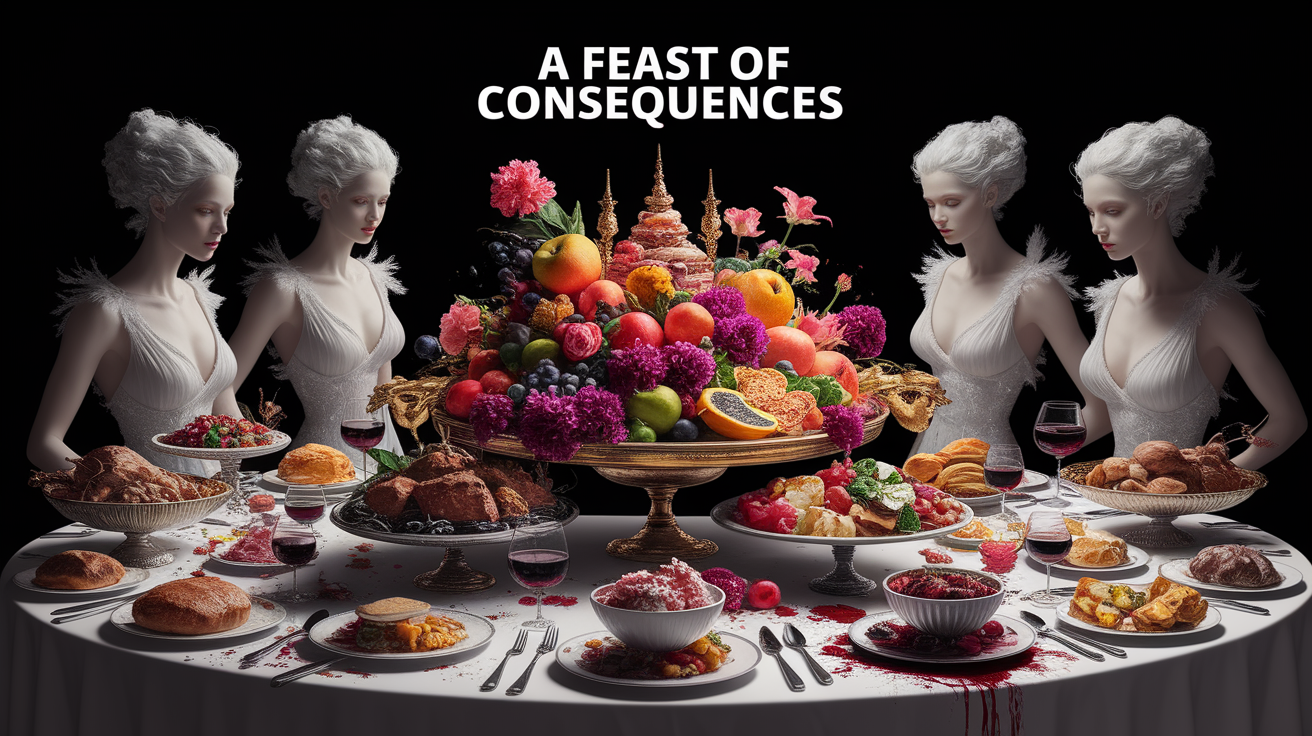
Picture this: You’re King Belshazzar of Babylon, throwing the ancient equivalent of the party of the century. The wine is flowing, guests are reveling, and you’ve decided to drink from sacred vessels looted from the Jerusalem Temple. Talk about a party foul of biblical proportions!
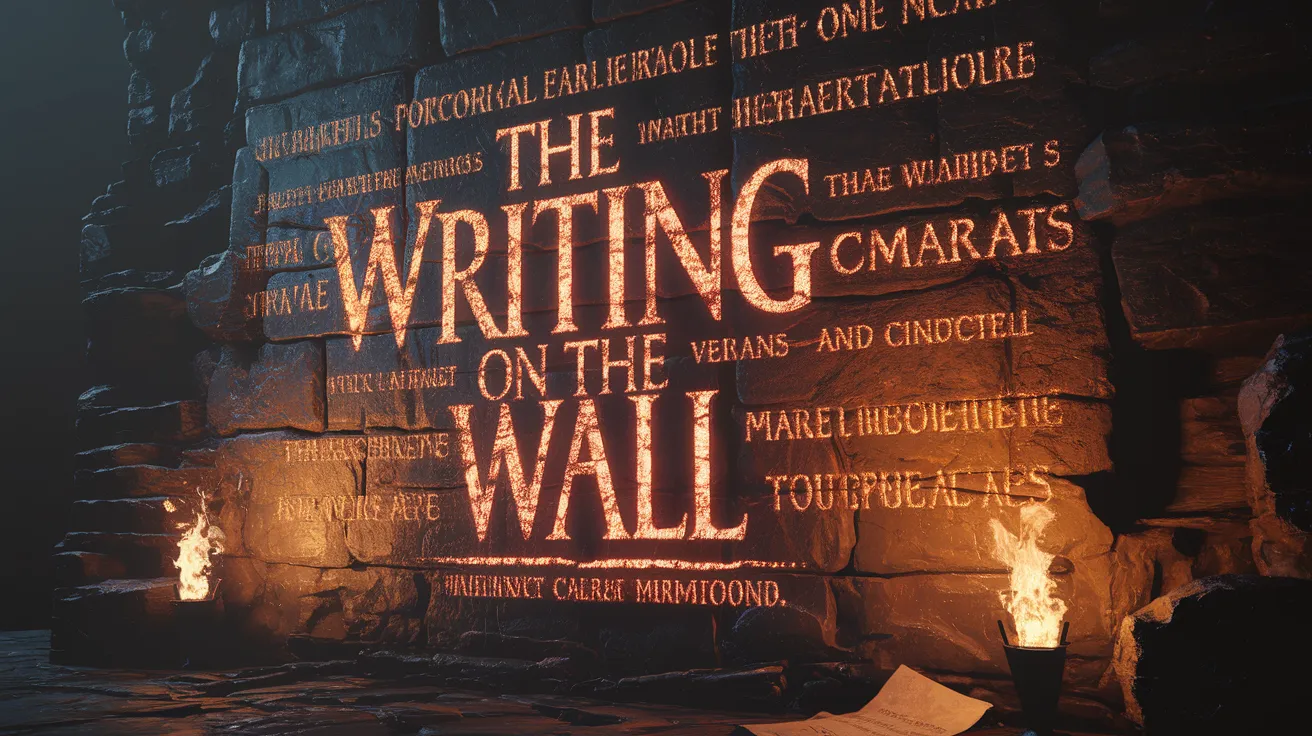
Suddenly, the festivities screech to a halt as a mysterious disembodied hand appears and starts writing strange words on your palace wall: “Mene, Mene, Tekel, Upharsin.” No filter, no explanation, just cryptic Aramaic text from a floating hand. Party. Mood. Killed.
This wasn’t just any ancient graffiti—this was the original “writing on the wall” as recorded in the Book of Daniel (specifically Daniel 5:5-31) in the Old Testament. Belshazzar, understandably terrified, calls for his wise men who are completely stumped by this supernatural wall post.
Enter Daniel, the original interpreter of omens, who explains this wasn’t just random scribblings but divine judgment:
- Mene: God has numbered your kingdom and finished it
- Tekel: You’ve been weighed on the scales and found wanting
- Upharsin: Your kingdom will be divided between the Medes and Persians
Talk about a bad performance review! That very night, according to the biblical account, Babylon fell to Darius the Mede, and Belshazzar was killed. When they say “immediate consequences,” they’re not kidding around.
From Scripture to Saying
So how did a spooky biblical prophecy become our go-to phrase for “uh-oh, trouble ahead”? As with many idioms, it took time for “the writing on the wall” to evolve from literal story to figurative expression.
By the early 18th century, people started using this dramatic image metaphorically. The Oxford English Dictionary cites 1704 as the earliest example of the phrase being used idiomatically. But it really caught on after 1837, when people apparently needed more ways to say “doom is imminent” (always a popular sentiment).
Today, when we say “the writing on the wall,” we’re talking about signs of impending doom or failure that are obvious to anyone paying attention. It’s that moment when:
- A company starts massive “restructuring” (time to update that resume)
- Your significant other suddenly “needs space” (relationship forecast: stormy)
- A politician says they have “full confidence” in someone on their team (start cleaning out your desk, buddy)
The phrase captures that moment when the signs of unavoidable trouble are clear as day—if only we’re willing to read them.
Cultural Echoes of Judgment
While the biblical story reflects actual historical events around 539 BCE when Babylon fell to the Persian Empire under Cyrus the Great, historians note that Belshazzar was likely just the son and co-regent of King Nabonidus rather than the main monarch. But hey, why let historical accuracy get in the way of a good morality tale?
The story has become a powerful cultural symbol of divine judgment against hubris and blasphemy. Artists throughout history couldn’t resist the dramatic potential of a ghostly hand appearing at a debauched royal feast. Rembrandt’s famous painting “Belshazzar’s Feast” captures the king’s terror as the mysterious hand does its supernatural graffiti.
Beyond art, the tale has influenced centuries of literature, sermons, and warnings about pride coming before a fall. It’s the original “narrator: it was at this moment he knew he messed up” meme, just with more dramatic consequences and fewer internet points.
The cultural background of Belshazzar’s feast reminds us that ignoring warning signs has been a human tendency since ancient times. Whether it’s climate change, economic bubbles, or personal relationships—we’re remarkably consistent in our ability to party on while ignoring the metaphorical writing on our walls.
The Phrase in Modern Media
Like any good idiom with dramatic flair, “the writing on the wall” has inspired countless titles across all forms of media. You’ll find it everywhere:
- Music: Iron Maiden released “The Writing on the Wall” in 2021, while Three Dog Night had their own version back in 1972
- Literature: Miklós Bánffy’s novel “The Writing on the Wall” examines the decline of the Austro-Hungarian Empire (talk about seeing doom coming!)
- Television: Shows from “Big Love” to “The Apprentice” have episodes titled after the phrase (particularly fitting for the latter, wouldn’t you say?)
- Film: A 2007 Canadian documentary used the title to discuss impending societal challenges
These cultural references all tap into the phrase’s power to evoke themes of warning, downfall, and the consequences of ignoring obvious signs. It seems we’re collectively fascinated by the concept of foreseeable disaster—perhaps because we keep repeating the pattern of ignoring clear warnings until it’s too late.
Reading the Signs: Conclusion
From a supernatural warning at an ancient feast to today’s everyday expression, “the writing on the wall” has had quite the linguistic journey over the past 2,500 years. It reminds us that sometimes, the signs of what’s coming are right in front of us—whether written by a mysterious floating hand or displayed in more mundane ways.
So next time you hear this phrase—or better yet, next time you spot some metaphorical handwriting on your own wall—maybe take a moment to consider whether you’re having a Belshazzar moment. Unlike the king, you might still have time to change course before your personal Babylon falls!
Until our next etymological adventure, keep your eyes open for those linguistic signs!
Sources
- Wikipedia – Disambiguation page covering the biblical origin and cultural references to the idiom
- Literary Devices – Explanation of the phrase’s meaning, origin, and biblical story
- Wiktionary – Etymology entry including the Aramaic words and Daniel’s interpretation
- Phrases.org.uk – Analysis of Belshazzar’s feast and the phrase’s evolution
- Grammaticus – Blog post on the cultural and biblical background
- Suzanne Arnold – Origin story exploration tying the phrase to biblical condemnation