

Unpacking the Bucket: The Curious Origin of ‘Kick the Bucket’
Ever wondered why we say someone has “kicked the bucket” instead of simply saying they’ve… well, died? Buckle up, because we’re about to wander through gallows, slaughterhouses, and even church aisles to track down the origin of this strangely cheerful euphemism for mortality. And yes, there will be kicking involved—metaphorically speaking (hopefully).
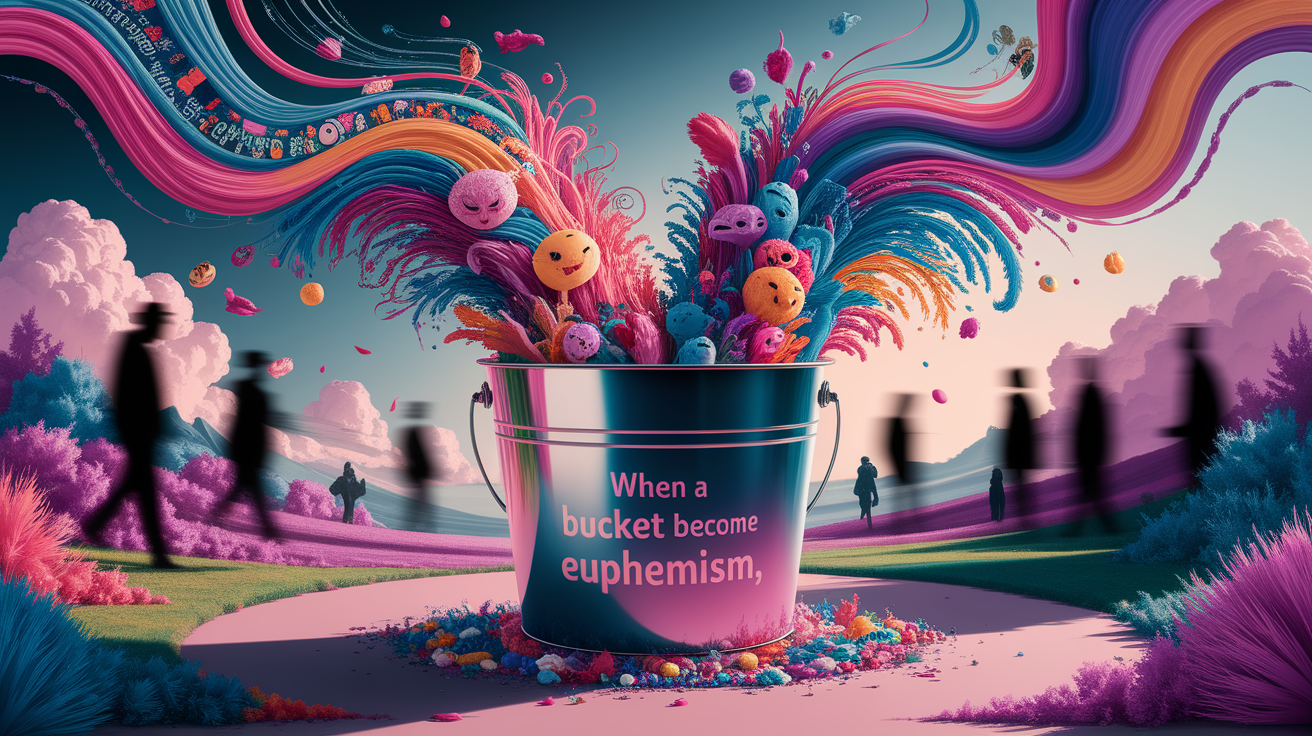
When a Bucket Becomes a Euphemism
First things first—what does this delightfully peculiar phrase even mean? In the simplest terms, “kick the bucket” is a colloquialism for dying. It’s slang, it’s informal, and it’s been a cheeky way for English speakers to mention someone’s demise without getting overly dark. Think of it as the linguistic cousin of “bite the dust” or “meet one’s maker.”
You might hear it in a novel, a comedy skit, or from that one uncle who just can’t resist making a pun at a funeral. Depending on tone and context, it can be lighthearted or jarringly casual—sort of like making a joke at a wake, which, let’s be honest, people sometimes do.
The Gallows Theory – Suicide by Hanging
One of the grimmer tales places the phrase’s roots firmly in the realm of public executions and suicides. Picture this: in the 18th century, someone about to hang themselves might stand on an upturned bucket, then—well—kick it away to seal their fate. Dark, yes, but morbidly logical.
In fact, an 1788 newspaper account describes exactly such a scenario, lending some disturbing yet concrete weight to this theory (source). This would make “kicking the bucket” almost literally the last action one could take.
Slaughterhouse Origins – Animals and Beams
Another theory? Forget humans—think pigs. In old slaughterhouses, animals were hung from a beam called a “bucket” after being killed. As they expired, their legs would sometimes kick against that beam. The phrase could have simply transferred from livestock to human life… because nothing says “warm, fuzzy idiom” quite like imagining your last moment as a pig’s final death throe (source).
Holy Water and Mourning Rituals
Here’s one with a little more sanctity (and less squealing). In Catholic tradition, when someone died, a bucket of holy water might be placed at their feet so mourners could sprinkle the body as part of funeral rites. The deceased, lying at rest, physically has a bucket near their feet—legs, bucket… you get the drift. While not as literally “kicky” as our earlier tales, this theory points to how religious and cultural customs seep into language.
Alternative Influences and Linguistic Patterns
Of course, language rarely comes from one single “aha!” moment. The Oxford University Press folks note that the phrase pops up surprisingly late in English print history. There’s even an old Latin proverb about a goat kicking over a pail and ruining its milk, which shares some thematic DNA about sudden, irreversible ends.

This kind of figurative language shows up all over the English language and beyond—death gets dressed up in all sorts of euphemistic outfits: “pass away,” “give up the ghost,” “shuffle off this mortal coil.” Why? Because talking about death directly makes us squirm, so we kick it into metaphor instead.
From Morbid Roots to Modern Usage
Fast-forward to today, and “kick the bucket” has lost much of its macabre sting. It’s often used jokingly—“If I eat one more doughnut, I might kick the bucket”—or in non-human contexts: “This toaster finally kicked the bucket.” We’ve filed the phrase under “harmlessly cheeky,” much like “bite the dust” or “croak,” even if the original imagery was… well, more intense.
Give the Bucket a Final Kick
So, where does that leave us? Whether “kick the bucket” leapt from gallows, slaughterhouses, funeral rites, or some linguistic goat tale, it’s a shining example of how humans creatively dodge the word “death.” We wrap mortality in idioms, dress it in humor, and turn a serious full stop into a playful turn of phrase.
Next time you hear someone say a celebrity “kicked the bucket,” you can smile knowingly—and maybe horrify them with your newfound arsenal of etymological trivia. After all, buckets aren’t just for water… sometimes they carry centuries of history.
And with that, I’ll pour one out (in a bucket, of course). See you next phrase hunt!
Sources
- Wikipedia – Kick the bucket: Overview of meaning, usage, and cultural interpretations.
- Grammar Monster – Kick the bucket: Multiple origin theories and usage examples.
- Word Histories – To kick the bucket: Details on the 1788 hanging account.
- Oxford University Press Blog – Kick the bucket idiom: Literary and linguistic analysis of the phrase’s origins.
- YouTube – Kick the bucket: Informal video explanation of meaning and background.